
El Chapo
-
Posts
211 -
Joined
-
Last visited
-
Days Won
26
Content Type
Profiles
Forums
Events
Everything posted by El Chapo
-
If you care that much, you should have a complete spare gun. I don't even bother to take my gunsmithing box with parts, I will either borrow a gun or DNF if my gun breaks. I have loaned my gun to other shooters and I assume someone would do the same for me.
-
I use Clays, 3.35 got me 159 power factor, bump that a tenth if you must.
-
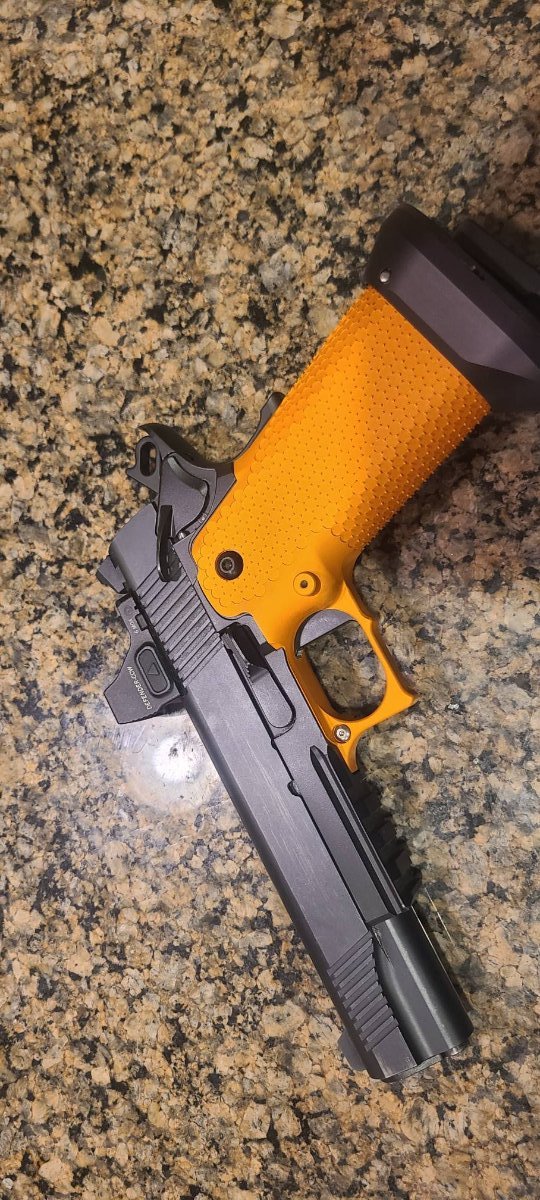
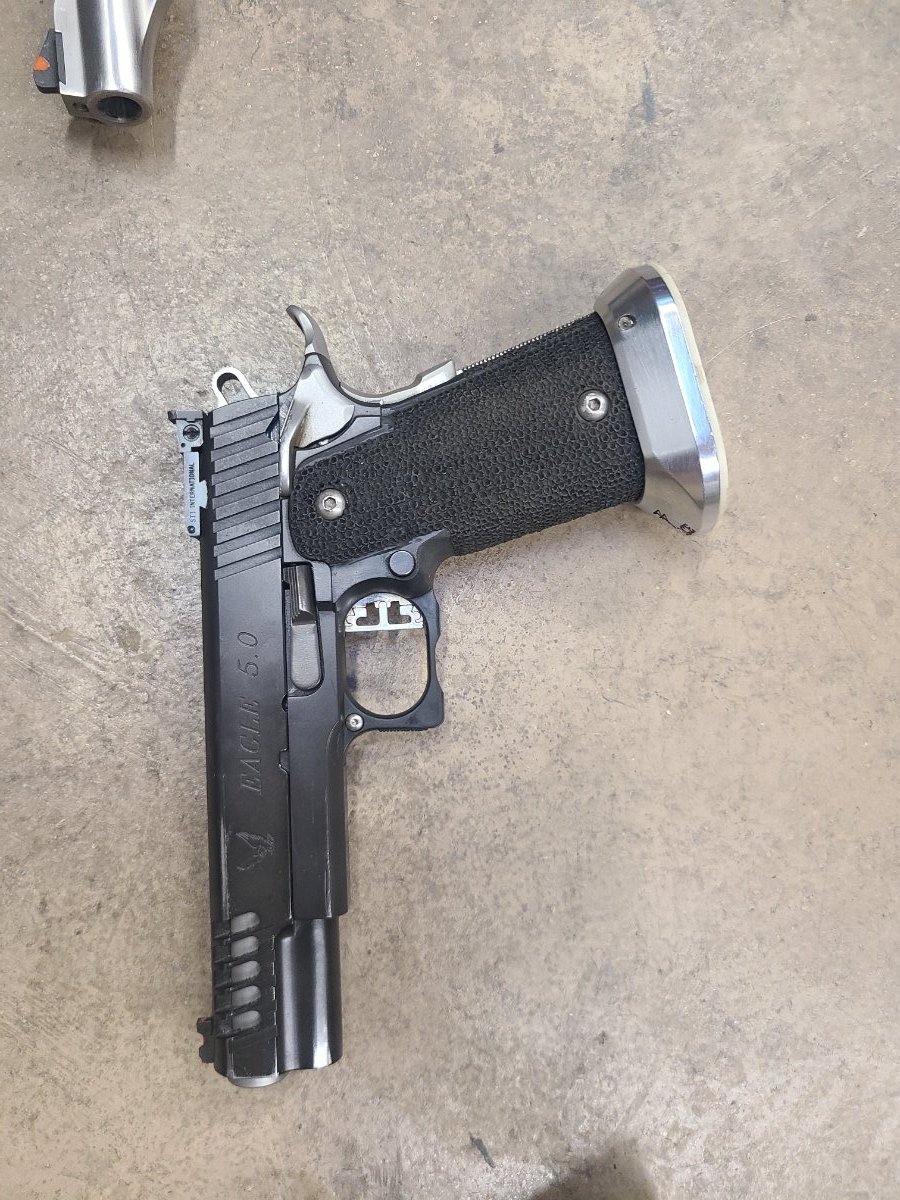
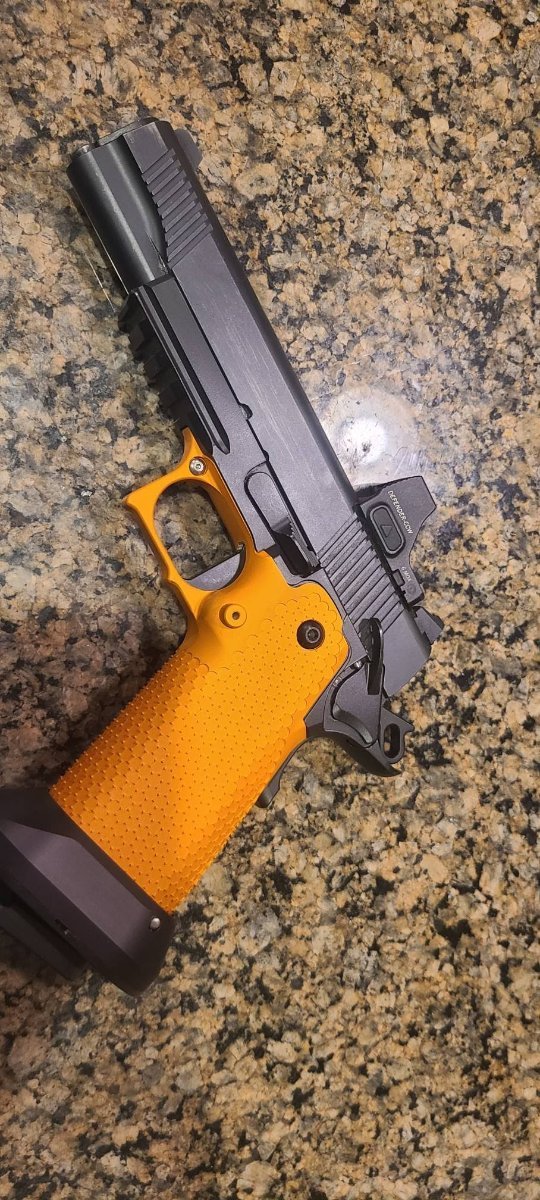
This is my 2011 that I've been shooting in USPSA for the last ~2 years and the other one I've shot since ~2008. 2011s are great for what they're made for, I've enjoyed them, but they definitely have quirks such that if you're not a tinkerer, they're really not the best choice.

-
I have been shooting 2011s since 2008 in competition. There are a ton of options now. Contrary to the current fad, which I am convinced will fade, the 2011 is not a carry or duty gun, it's a tool for winning matches. I have been shooting a 9mm in LO this year, I will be transitioning back to single stack after the NM Sectional which is in October, and probably shooting that for the foreseeable future because I enjoy single stack. Back in the day, before the division died completely, I shot Limited with an STI Eagle for ~16 years. Unfortunately all the iron sight divisions are pretty much dead, so it's pretty rare that I get the limited gun out these days.
-
This is mine that I use for USPSA.
-
New "S70" Colt 1911, anything needed?
El Chapo replied to Dantankerous's topic in The Wild Bunch Wire
A company that would let a 1911 out the door with a 7 pound trigger is no more likely to send you back a gun in serviceable condition than they were the first time. Like I said, ignore Colt at all costs and get yourself a Dan Wesson if that's what you have budget for. Colt is garbage. -
I've actually loaded a 230 grain rn in .45 Colt. It's not the preferred bullet but I have done it.
-
New "S70" Colt 1911, anything needed?
El Chapo replied to Dantankerous's topic in The Wild Bunch Wire
Traditional, probably not. That's Tisas territory. In fact, I need to start looking for one and get it. I don't even want to shoot Traditional, but I should have one anyway. For $400, why not? -
New "S70" Colt 1911, anything needed?
El Chapo replied to Dantankerous's topic in The Wild Bunch Wire
The last time you must have bought those parts and services must have been 50 years ago. The labor price for a trigger job alone will eat up $200. Maybe take a gander at the EGW website and see what a hammer, sear, and disconnector alone cost. Then add thumb safety, barrel bushing, grip safety, ejector, and whatever else tickles your fancy. To be comparable to a Dan Wesson, add $3-400 for frontstrap checkering. If it's blued, add refinishing. $250 is maybe enough to get a sloppy new gun assessed for what it needs, it is not enough to get any meaningful work done in the year 2026. People at McDonalds are getting paid $20 an hour. I have never even asked them to take a Colt revolver out of the case at the store because they are all stainless. I had always thought the appeal of Colt revolvers was the bluing, but I guess not now. My DA revolvers come from two companies, S&W (primarily) and Ruger. The pricing alone on Colt 1911s would talk me out of them. Even if the build quality was identical (it isn't), even just comparing the features offered for the money would demonstrate that Colt is not a good value. Dan Wesson or go to a semi-custom for the price range we're talking about. Colt isn't even in the running. -
New "S70" Colt 1911, anything needed?
El Chapo replied to Dantankerous's topic in The Wild Bunch Wire
I would not pay money for a new Colt at any price. In fact, I'm not sure I'd even want one if it was given to me for free. Colt is done, has been done for a long time. Get yourself a Tisas, Dan Wesson, or Nighthawk depending on your budget. Don't waste your time with Colt. The guy above me is suggesting that you buy the gun and send it off for $1500 worth of gunsmithing right out of the gate. The Dan Wesson will already have all of that done when you receive it. -
I need to get myself one of those. Tisas does not use MIM parts, they are the best mass produced 1911s I've ever seen, not even a contest when you realize what an excellent value they are. My USPSA Limited Optics gun is a Tisas and while I've done a lot of my own work to it, the total price of all of that is less than half of what it'd cost to buy a comparable steel grip 2011 from any manufacturer. All of the fire control, including the thumb safeties, besides the trigger, are orginal.
-
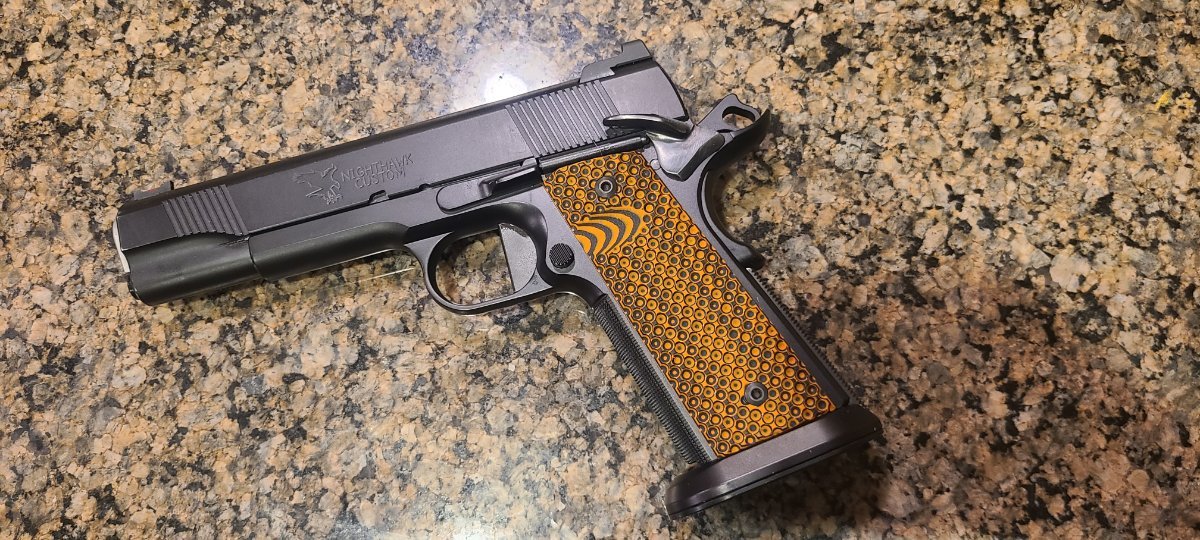
In that price range, my choice would be a Dan Wesson. To answer your question, I'm not using a $1500-2500 1911 in WB. I do shoot a Nighthawk in USPSA. Before last year, I was shooting a $600 STI Spartan for USPSA for a long time. My WB gun is a Kimber that is 25 years old.
-
New to the internet, eh?
-
I wish they'd just modify the rules to allow any wood stock pump shotgun in Wild Bunch, at least in the modern category. I'm not sure we are gaining anything by requiring a particular model. I view it as different than CAS because the 97 is pretty unique in appearance. It'd be so much easier for people to start shooting if they didn't need a particular shotgun. Allowing side by sides a few years ago was a step in the right direction, but we ought to take it further.
-
The federal ammo in question is just powdercoat like I do at home (from what I've seen at matches) and will be fine for WBAS.
-
All of it comes down to magazines. The GI style feed lips release too early and that can cause feeding issues. Most all 1911s will feed SWCs with the right magazines. There can be issues if SWCs aren't loaded to the correct dimensions, I had my own feeding problems this past year and I've loaded tens of thousands of .45 Auto cartridges. I am shooting 230 RN bullets because the SWCs aren't any softer, but you will probably see me at a WBAS match shooting SWCs sometime soon because I casted a bunch of them and they need to go somewhere. I use Tripp Research mags, and I haven't found anything that feeds as nicely as they do.
-
I wouldn't shoot a match that did the 5 round thing, I'd just shoot cowboy there instead.
-
what was with the 5 shot mags?
-
So a limit was there before and after that. A 170 grain bullet has never been legal in WBAS since I have been a SASS member.
-
It's been there the whole time with the min bullet weight over many iterations of the rule changes. Back to the original question, the military used Bullseye to load .45 Auto in WWII. The load for a 230 grain bullet was 5 grains, which is probably a bit hot by today's standards. I would start there and work up with a 170 grain bullet. According to quickload, 5 grains will push a 200 grain LSWC to 165 pf, 5.2-5.3 will probably get you there with your lighter bullet. No sense in overthinking this, even with a 200, 6 grains is within pressure limits and 192 pf, you have plenty of headroom to work up if needed. FWIW I have not personally loaded Alliant Bullseye in anything, mostly because I started with Clays and I've yet to find anything better for 45 Auto. It was unobtainium for a few years so I tried some other stuff, and if Bullseye was available, I might have tried that, but I had other stuff that worked. There is nothing wrong with bullseye, I just wanted to share that I have not personally used it, I am sharing information based on inference from that the military used it and playing with Quickload a bit. As with all load data you find on the internet, you should cross reference it against a published source. If you can't find data for a 170 grain bullet, use 185 grain or 200 grain lead bullet data and work your way up.
-
I know when I see AI edited nonsense and so does everyone else. Boggus was banned for this forum or he probably would be saying the same thing I am, that AI edited nonsense with no bearing on the question presented here is not helpful.
-
What I'd really like for you to do is stop posting AI-edited nonsense instead of sharing your actual experience, you know, kinda like everyone else who posted in this thread, including me.
-
The slide is supposed to impact the frame (guide rod actually) when the gun cycles. The recoil spring is not there to prevent this, it is there to store energy to push the slide forward. I'm not sure where you got the idea that the slide magically stops before its cycle with the right springs, but that is not the case.
-
The reason I'm asking is primarily to identify the feed lip design and dimensions, and if they're made by someone else, if they're similar to those. The brand on the bottom doesn't make them feed or determine when they release. FWIW I have a suspicion that Wilson Combat doesn't make their GI style mags either, but I have zero to back that up. It would be interesting to see a comparison though, because not too many people are buying GI style mags these days, so I wouldn't be surprised if there are much fewer manufacturers and designs than there are brands.
-
Does Colt even make magazines? I'm not a Colt fan so I honestly have no idea.