Leaderboard



Popular Content
Showing content with the highest reputation since 09/19/2026 in all areas
-
The new production from Colt will be rougher and less tuned than the ones made in the hay-days of Colt Series 70s (1972 to 1985 or so). You certainly would NOT want them to still be making their collet barrel bushing. It was destined to break a leg off and jam the gun - mine did during a match! It's well worth a trip to a good pistol smith to have the gun tuned, trigger set to the pull weight you like (3.5 pounds is my preference), and mag well enhanced for the WB allowed funneling. If you have ever had a 1911 bite you on the web of the shooting hand, I would have the smith add more clearance between the top of grip safety and the tip of the hammer. I would also have the smith replace any MIM (molded and sintered) internal fire control parts with forged-billet-steel. They are easier for him to get a smooth surface on anyway, so if you use a good smith, he should automatically swap those parts out. But then, I'm going by my experience. I put in billet sear and hammer and thumb safety and 100,000 rounds later have not had a bit of problem. Sights on production now are pretty good. About as high as any replacement sight set. If you were expecting to change out the sights, though, now would be the time to do that, too. A new front sight ought to be dovetailed into the slide so it will be driftable and easy to exchange. And much more rugged in use. good luck, GJ5 points
-
And, I forgot to mention that GOOD magazines are a necessity! Spend extra on them.5 points
-
I bought a new Colt Competition series 70 model earlier this year; let my dealer talk me into it instead of the Springfield TRP that I asked about. It is currently my main WB 1911 but the only factory parts that remain are the slide, frame, and mainspring housing. The pistol came from the factory with a barrel bore with no rifling present in 1/4 the length of the bore (looks like the rifling was cut off-center), a 7 lb trigger pull rougher than a gravel road, grip safety that had voids in the casting, and a thumb safety that was fitted incorrectly. The slide to frame fit was okay but a bit on the loose side. Rather than send it back and wait 8-10 months for them to do nothing but replace the barrel (maybe) I did the work myself. Not being a fan of MIM parts, those were all replaced with forged, a Cart barrel installed, new sights, and resprung. It now runs 100% with 230 gr. RN and 200 gr. SWC. Others have bought new Colts and been happy but I cannot recommend them. I did eventually buy a TRP which was much better but still used MIM parts. Those were replaced.3 points
-
February 13-14, 2027 10 Stages Cowtown Range 10402 W Carefree Hwy Peoria AZ. WB 2027 AZ State Championship Application -No Highlight 092226.pdf3 points
-
Never seen anyone that I would have do pistol smithing who would charge those rates. Especially not for fire-control smoothing and even new sights. Last paid smith job I had done - new sights on a 1911, including dovetail milling and a front sight from scratch - $250. COULD you find a guy ready to charge $1500 to tune it up? Sure. Should you? No. But, I either do my own tuning, or (if I didn't) would send to a reasonably-priced gunsmith for the tune of any NEW gun under about $2000. good luck, GJ3 points
-
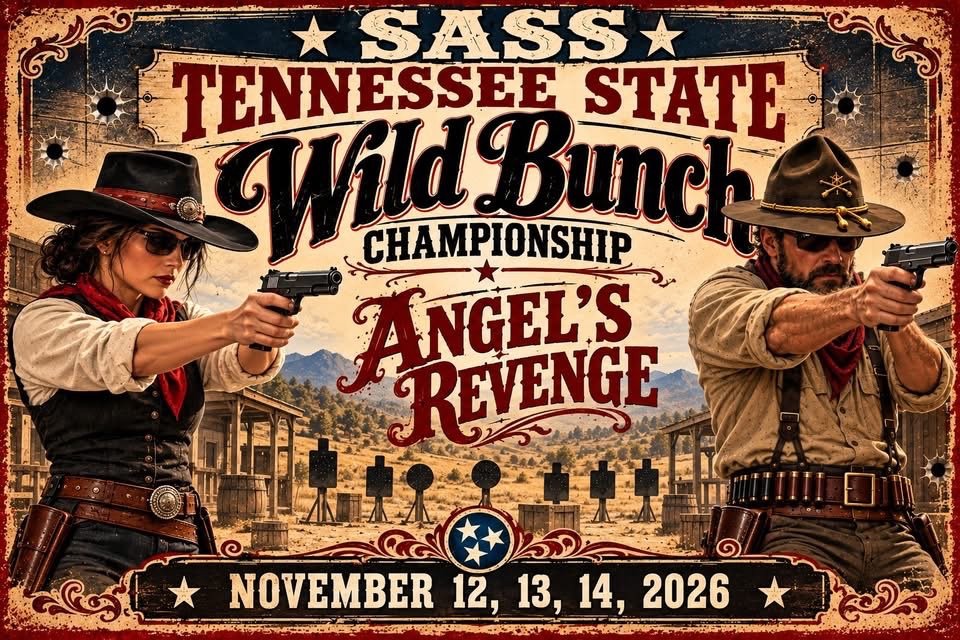
Moonshine Cowboy Action Shooters is a SASS-affiliated club that holds a monthly CAS match on the first Sunday of the month with a start time of 11:00 a.m. Location is 2600 SC Hwy 11, Travelers Rest, SC (about three miles from Hwy 25 North). They do not have a website but there is a Facebook Group. The old group “Moonshine at Dark Corner” is not the current group. To encourage cowboy shooters to “give it a try”, they have allowed shooters to use a 1911 pistol at the September match and will again at their October 4 cowboy match. I was at the September match where half of the shooters “went Wild”. Their first “dedicated” Wild Bunch match is scheduled for Saturday, November 28, 2026 with an earlier start time (first round downrange at 10:00 a.m.). I can help field questions and provide contact information for the club’s Wild Bunch point man “Lazy Eye”. The club is convenient to Western North Carolina as well. If you are in the region and enjoy Wild Bunch, let’s support this effort!3 points
-
If you care that much, you should have a complete spare gun. I don't even bother to take my gunsmithing box with parts, I will either borrow a gun or DNF if my gun breaks. I have loaned my gun to other shooters and I assume someone would do the same for me.2 points
-
Deleted. Responding on this thread is pointless. Keep genuflecting to your prejudices and biases. The forum should be disgraced at some of the vitriol spewed.2 points
-
https://www.brownells.com/gun-parts/handgun-parts/handgun-grips-parts/1911-auto-oversized-stock-bushings--tap/?sku=080570000 Order the above to fix it yourself, or have a gunsmith do it. I've had it done on a Colt years ago, and it's still going strong.2 points
-
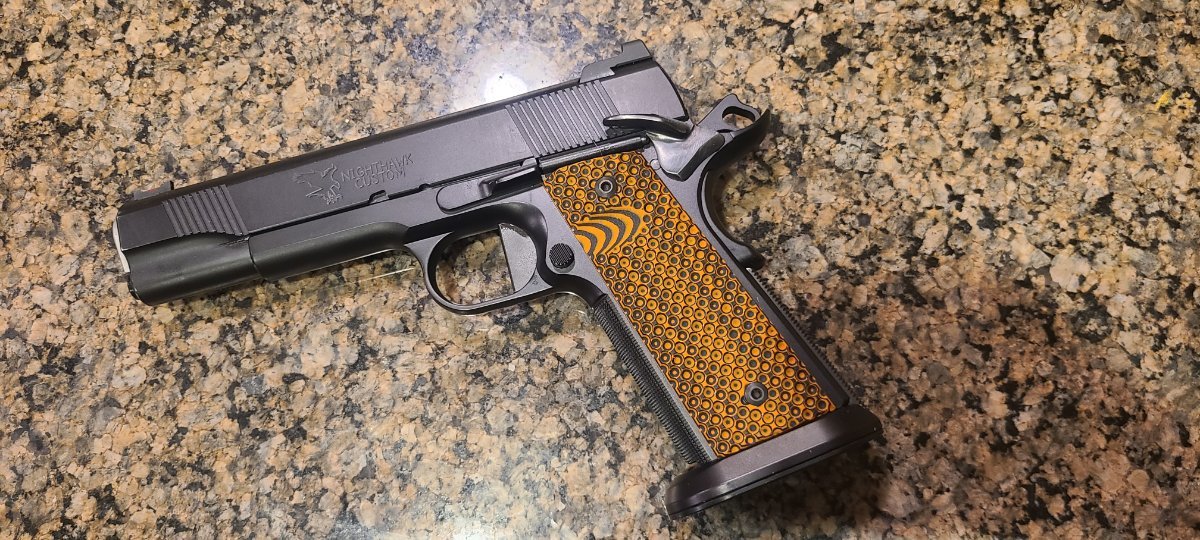
This is mine that I use for USPSA.
 2 points
 -
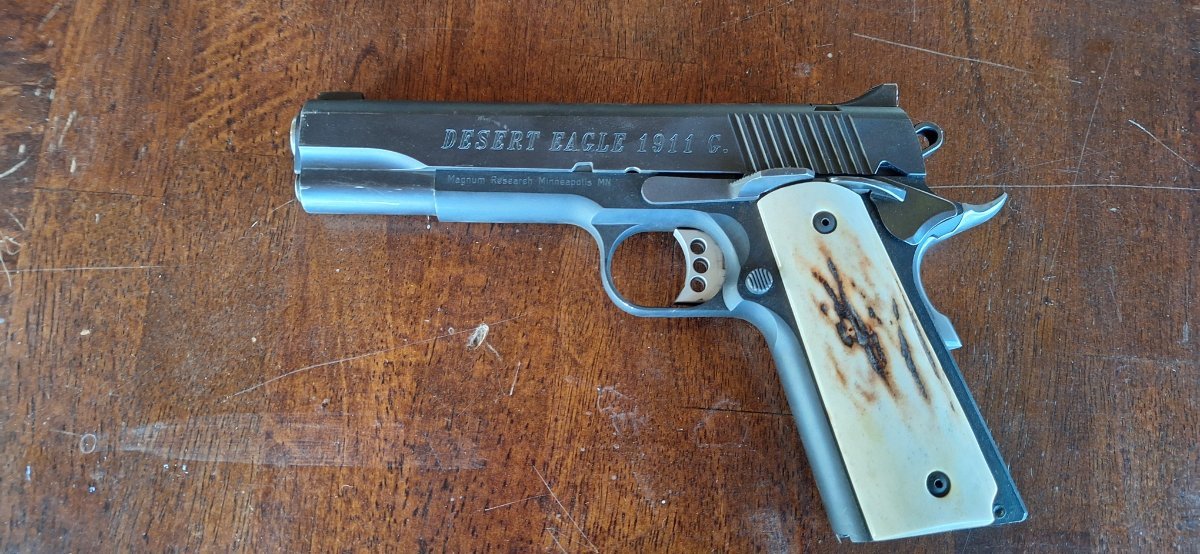
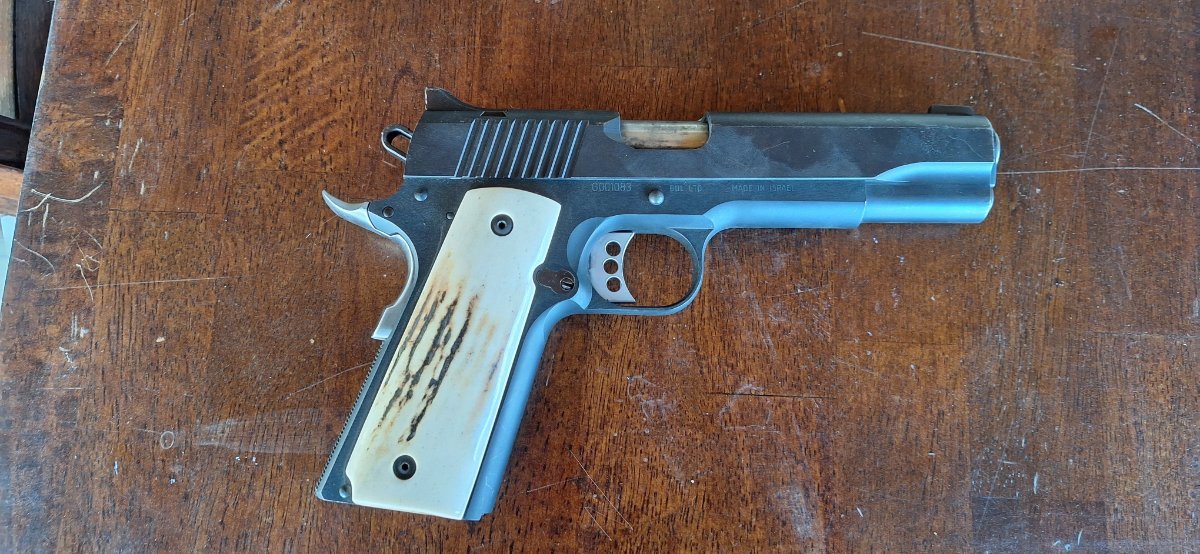
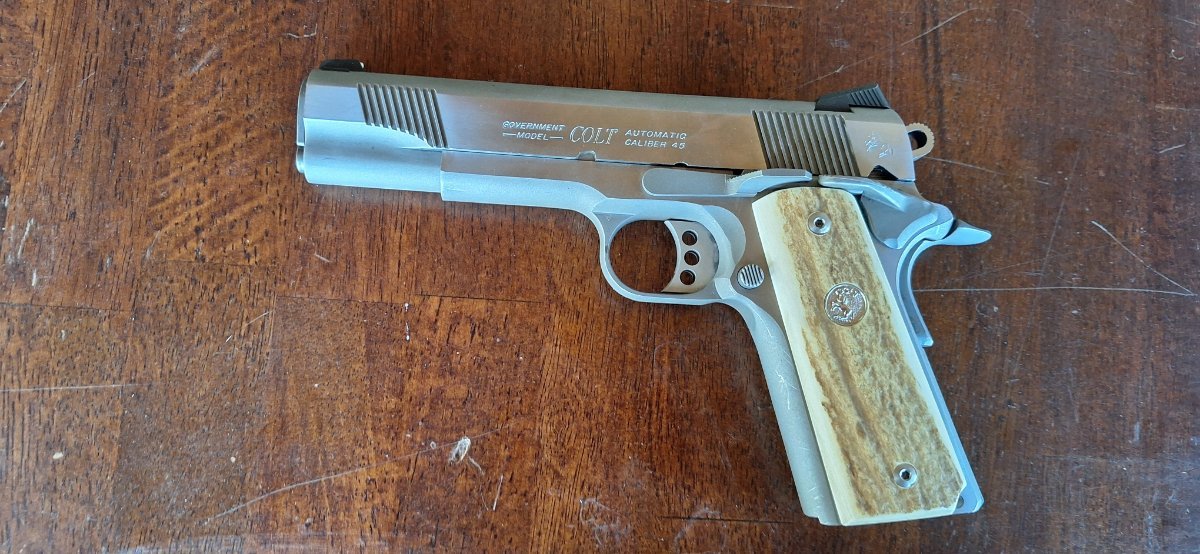
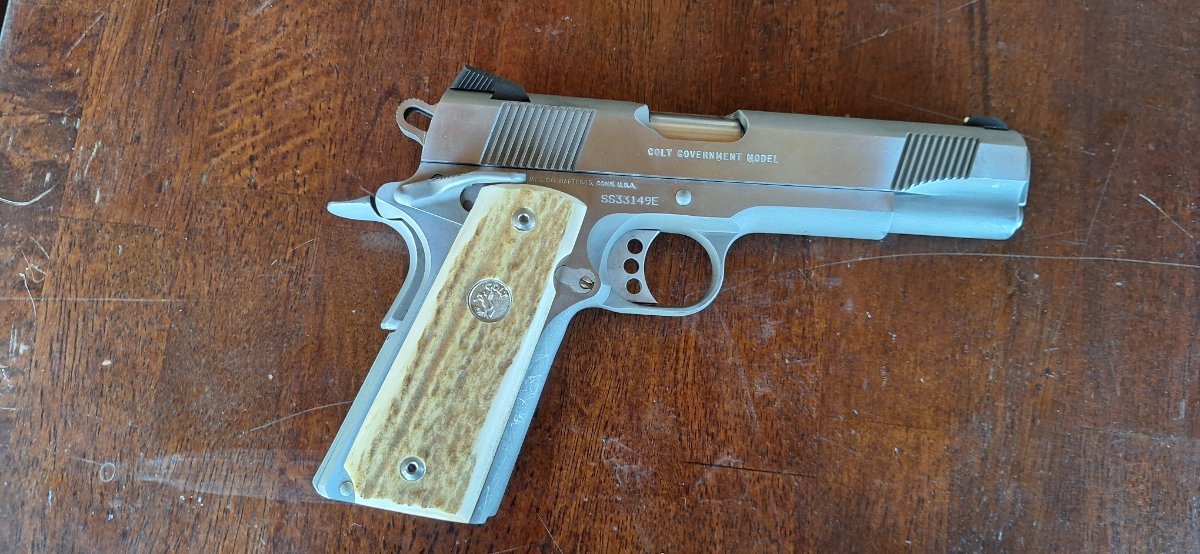
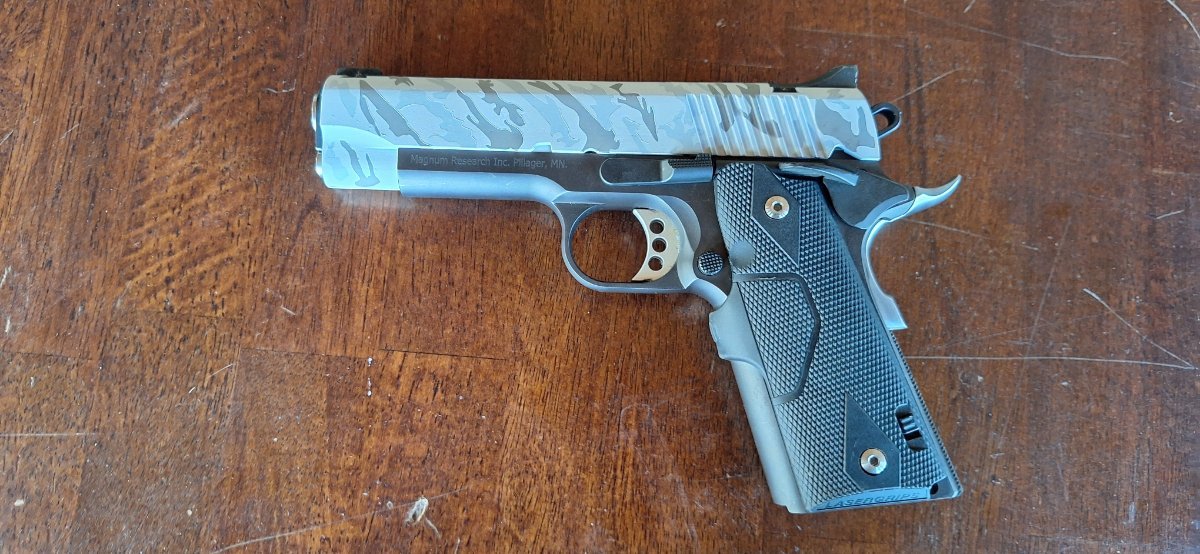
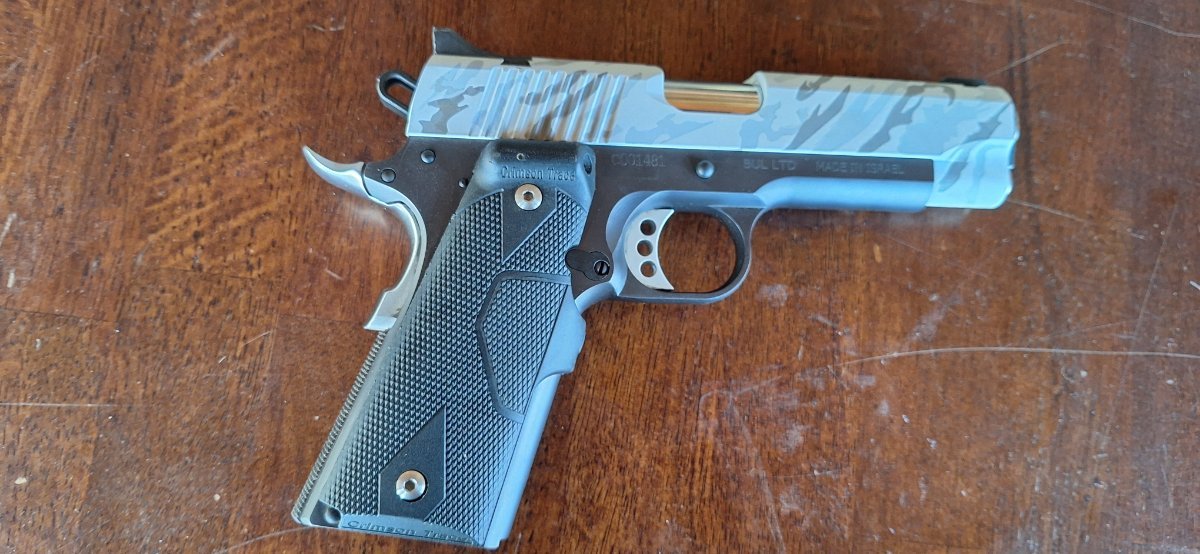
These are my 3 main 1911's. Full size DE. It was an early one, and has the billboard on the side, but it's probably my best .45. Full size Colt, and it's my back up WB 1911. Works great, but I don't want to beat it up too bad..... My commander DE, not WB legal, but was carried a lot, also an earlier model, but 'smith filled in the billboard, and then Cerakoted the slide. It has a set of Crimson Trace green laser grips, which is almost unfair, but I've never had a problem with it.
2 points
-
At the risk of making someone a little peeved, I can recommend Desert Eagle 1911's. When I could still do WB, I didn't want to tear up my Colt's or WC's, so I thought I would try one of them. All I did was change the grips and main spring to accommodate a lighter load, and with WC or McCormick magazines, I've never had a FTF or ejection problem. I liked it so well I bought a commander, and used it for years as an EDC. The only thing I didn't like about that was with Kydex, it wore some of the blueing off. I have since had that resolved with a custom Cerakote job, and she is sure pretty now. If I can dig through the safe, I will try to get some pictures, if anyone is curious. While I lack the knowledge of a lot you on here, I have enjoyed figuring out how to make them run. No one explained to me that a 1911 doesn't just dig a rabbit hole to go down, but it turns into a network of tunnels, with many twist and turns, and goes deeper than you could have guessed.2 points
-
For what it is worth, anecdotal, I know, I have been using a Colt Competition 1911 that is actually a series 80. The only modification has been to change the front sight to a gold bead. I use good magazines and double check my ammo. No malfunctions ore issues.2 points
-
A company that would let a 1911 out the door with a 7 pound trigger is no more likely to send you back a gun in serviceable condition than they were the first time. Like I said, ignore Colt at all costs and get yourself a Dan Wesson if that's what you have budget for. Colt is garbage.2 points
-
(I certainly am not everybody), but I load 4.2 grains of WST behind any lead slug in the 225 to 230 grain range, to usually make about 160-165 Power Factor. Each 1911 I have loaded for shoots slightly different velocities for the same loading, though, so you need to check the load in your gun. good luck, GJ2 points
-
Agree with GJ. I have used STI, Colt, Ruger, and Rock Island 1911's with success, and I see many others using 1911's costing less than $1200. It is your money, and it is nice to have a nice 1911, but you might be overspending for Wild Bunch. Just as important may be producing good quality ammunition that always functions in the 1911.2 points
-
Because I only shoot WB as a side match I don't bring anything extra except ammo.1 point
-
1 point
-
I just have backups with me for everything. And if it's a match a ways away that I am camping at...I have a lot of parts for the wild bunch rifles and for cowboy guns1 point
-
I use Clays, 3.35 got me 159 power factor, bump that a tenth if you must.1 point
-
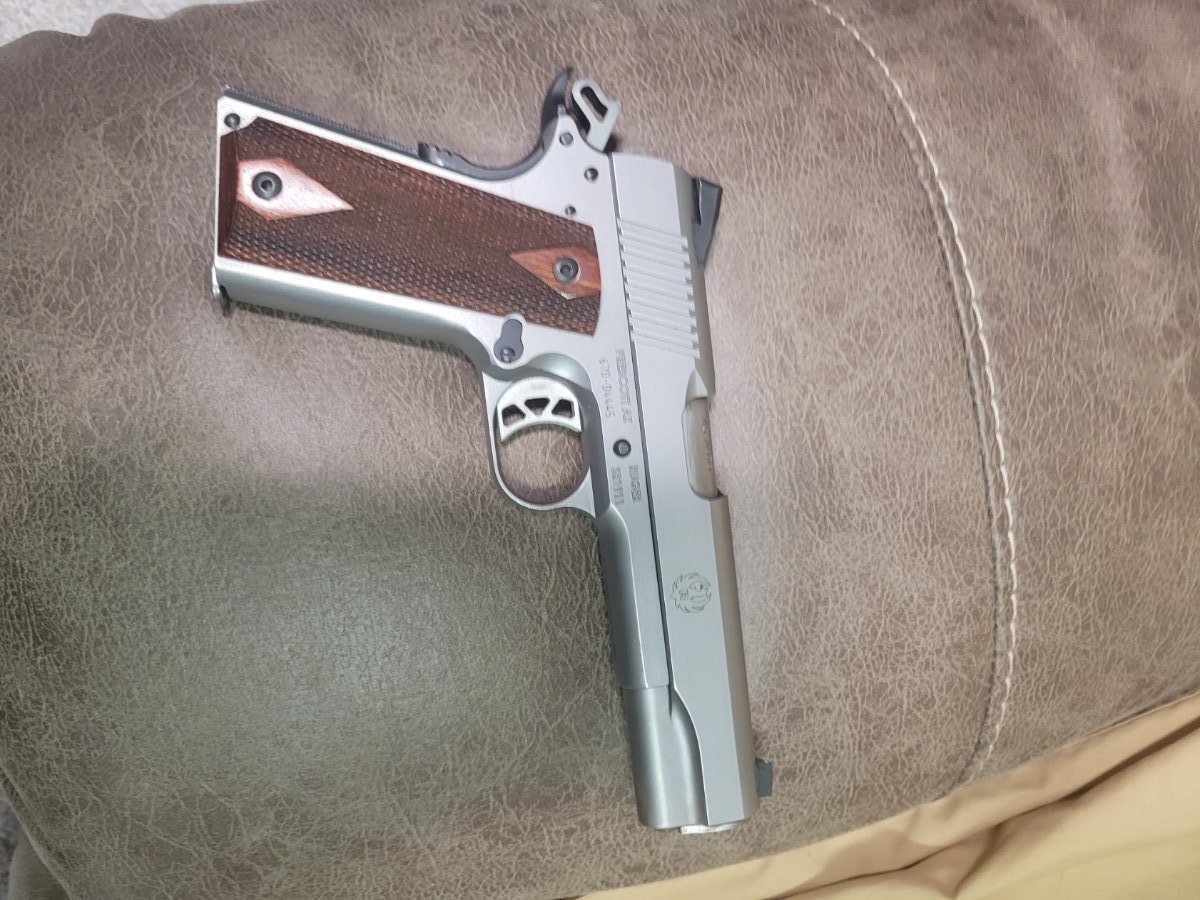
Ruger SR1911. Except for double diamond grips, a brass bearing glued into the front sight, and a Cylinder & Slide Shop sear spring, it's all stock.
1 point
-
Those are sweet! I've always wanted an early production Colt, but haven't found the "Right" one yet. My brother, and my best friend are both FFL's, and every so often they see Tisas under $200. We have been thinking about getting a couple, and seeing if we can drop in a Nighthawk ignition system, just to see if it would work. On paper, it should, but you never know...... If we do, I will report on how it goes. On a different note, how many have gone down the 2011 hole? I have a couple of Staccato's, one a double stack 45, and it shoots like a 9. Actually I think it's an STI. Then I had to get a couple of WC's, just for grins. Then I found a DWX, and it's a completely different animal. The good news is that it fits 1911 holsters just fine. and the factory magazines hold a couple of more rounds than the others do. You either love the grip, or you don't. Personally, it works for me. Which led to me rescuing an Italian police issued Browning Hi Power, and doing a complete rebuild and Cerakote as it had been rode hard and put up wet. Literally. It was rusted pretty bad, but looks brand new now. I would get pictures, but I will have to wait until tomorrow, if anyone is interested? I felt bad posting pictures, but if we can see some other cool guns, and hear their story, that would be awesome. We are kind of the keepers of history, and my brother is a striker kind of guy, but he will shoot anything I bring to the range. Especially if I bring the ammo. Let's keep this one going, and if you're just perusing the post, but have something cool, please chime in, and if you have pictures, let's see them.1 point
-
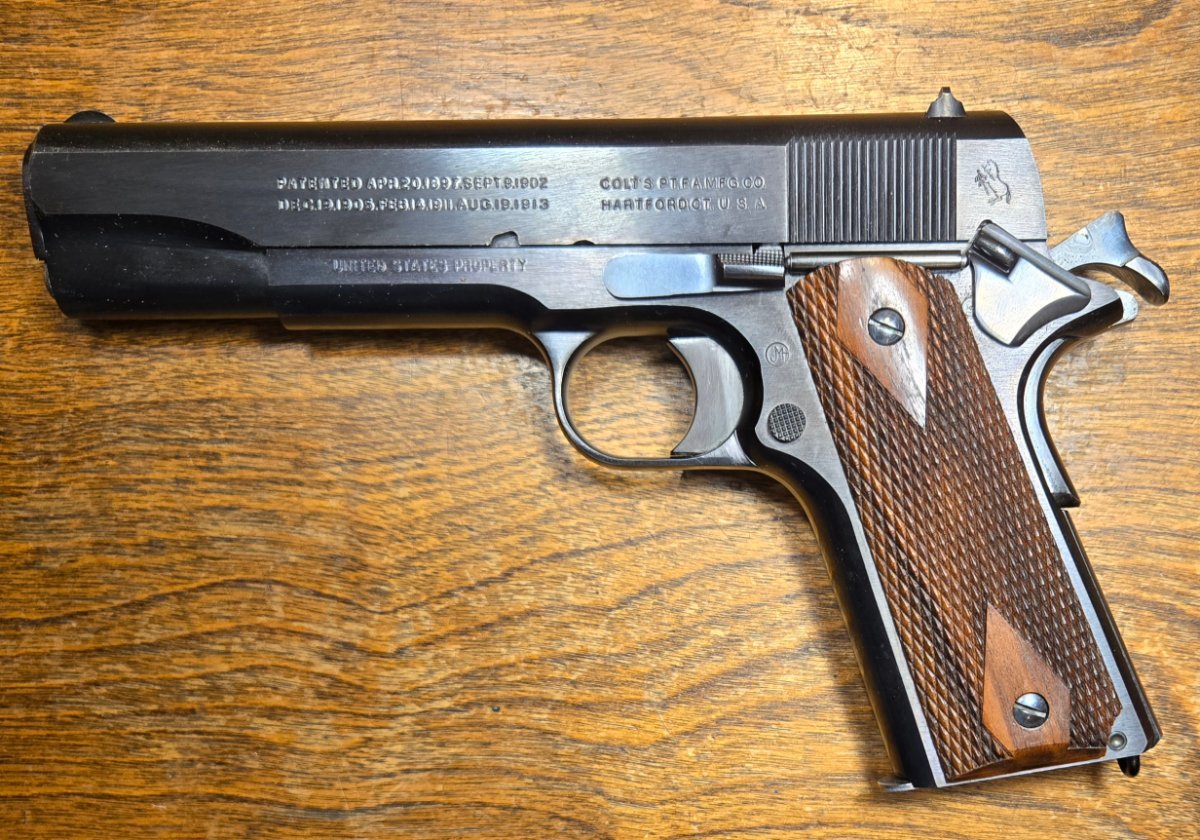
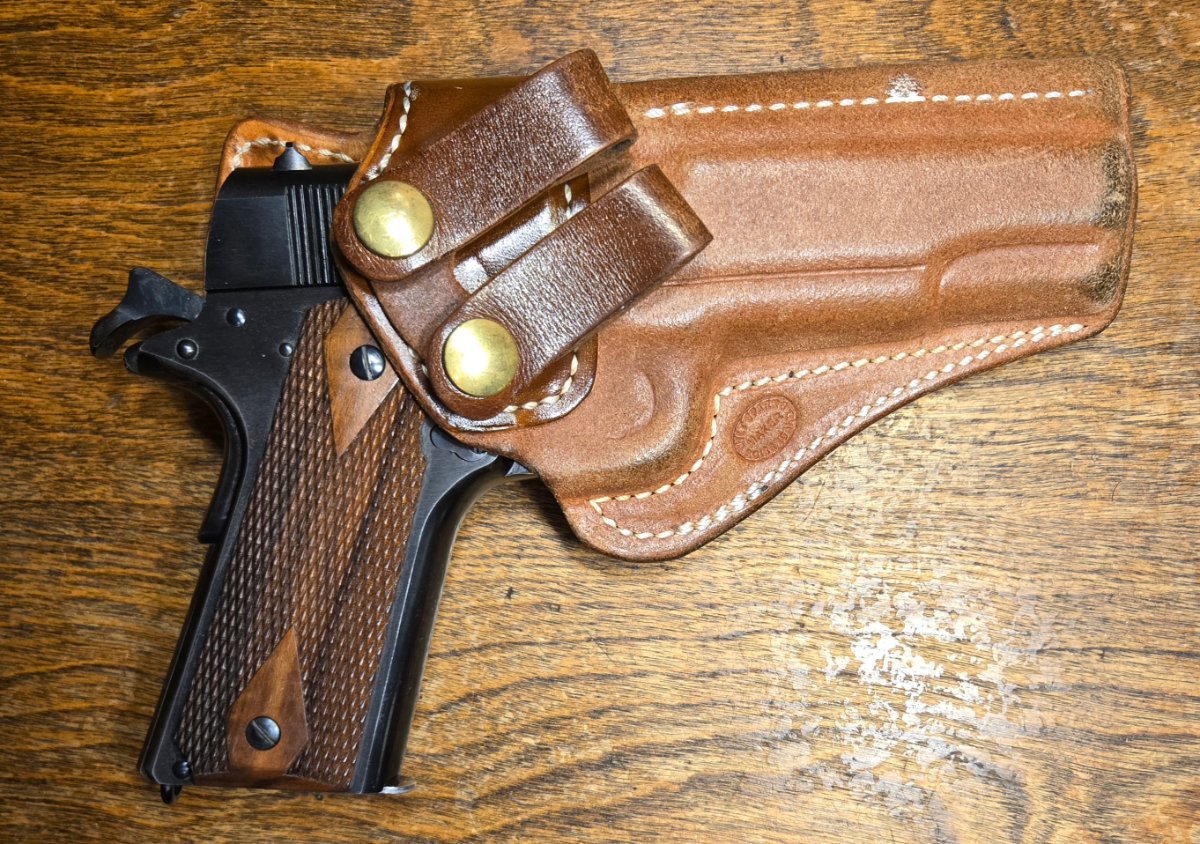
My only 1911 currently. Colt 1918 reproduction. Factory stock, shoots WB and gets carried.
1 point
-
I have used 4.1 grains of WST for 225 gr. flat point in, Reds 45 power factor is 164.4, in mine it is 169.4 power factor. ST1 point
-
Your assumption is incorrect. This is a guy who is a good friend of mine, sold it to me at his cost, never charges me a transfer fee, and even refused to let me pay for a rifle that I 'bought' for my son's Christmas present. He actually did offer to send it back but I figured the most that I could count on was the barrel replaced and an 8-month wait. Most 1911s in that price range are what I consider to be kits anyway. I don't mind doing the work and end up with something built the way that I want without spending big money with the high-dollar smiths.1 point
-
I really like the 200 grain in a 45 Auto. I use the same bullet in 45 Auto as in the 45 Colt, a 200 grain Round Flat Nose. Don't get me wrong, the H&G 68 is a great bullet, but having one that works in both cartridges is mo' better!1 point
-
4.4 grains of HP-38 (231) under a 225 TCFP gives me 700 fps (157.5 PF) in my 1911.1 point
-
Traditional, probably not. That's Tisas territory. In fact, I need to start looking for one and get it. I don't even want to shoot Traditional, but I should have one anyway. For $400, why not?1 point
-
Quite a few of the new Colt DA revolvers are now blued, and gorgeous they are. Pythons and Anacondas. I agree Dan Wesson makes a great 1911, just not sure I've found a DW legal for Traditional WB.1 point
-
The last time you must have bought those parts and services must have been 50 years ago. The labor price for a trigger job alone will eat up $200. Maybe take a gander at the EGW website and see what a hammer, sear, and disconnector alone cost. Then add thumb safety, barrel bushing, grip safety, ejector, and whatever else tickles your fancy. To be comparable to a Dan Wesson, add $3-400 for frontstrap checkering. If it's blued, add refinishing. $250 is maybe enough to get a sloppy new gun assessed for what it needs, it is not enough to get any meaningful work done in the year 2026. People at McDonalds are getting paid $20 an hour. I have never even asked them to take a Colt revolver out of the case at the store because they are all stainless. I had always thought the appeal of Colt revolvers was the bluing, but I guess not now. My DA revolvers come from two companies, S&W (primarily) and Ruger. The pricing alone on Colt 1911s would talk me out of them. Even if the build quality was identical (it isn't), even just comparing the features offered for the money would demonstrate that Colt is not a good value. Dan Wesson or go to a semi-custom for the price range we're talking about. Colt isn't even in the running.1 point
-
Quite frankly, if I were to get another 1911, whether for WB or just plain to own... it would be Colt's 1911 Classic. MSRP of $1,069. 6 of my 7 current 1911s can be used for WB as is... 2 in modern, 4 in Traditional, only 2 of which are Colts (a GI issue & a Gold Cup). However the ones I use for WB are a pair of Taylor Tacticals. One that I won in at a match (finished in the right placement)😉... and another that I bought as a backup. The model I have is no longer available. The frame is patterned like a 1911, not a 1911-A1, so it doesn't have the chamfered area by the trigger, which for folks with shorter fingers is an issue, me, not so much. IME, any 1911 in anything other than a full race gun needs a couple of things to make it reliable... 1 - a slight alteration to the ramp to feed a wider variety of bullets, and a trigger job, crisper is how I describe it. Magazines should not be an after-thought. I have gotten by for the past 15 or so years with CMC "Shooting Stars". Others prefer Tripp Research, (now CobraMag). You cannot go wrong with em. I have one very similar to them, an 8 rounder, marked as a KimPro TacMag. It's been a reliable mag, but I don't have it as my 1st string of mags.1 point
-
I would not pay money for a new Colt at any price. In fact, I'm not sure I'd even want one if it was given to me for free. Colt is done, has been done for a long time. Get yourself a Tisas, Dan Wesson, or Nighthawk depending on your budget. Don't waste your time with Colt. The guy above me is suggesting that you buy the gun and send it off for $1500 worth of gunsmithing right out of the gate. The Dan Wesson will already have all of that done when you receive it.1 point
-
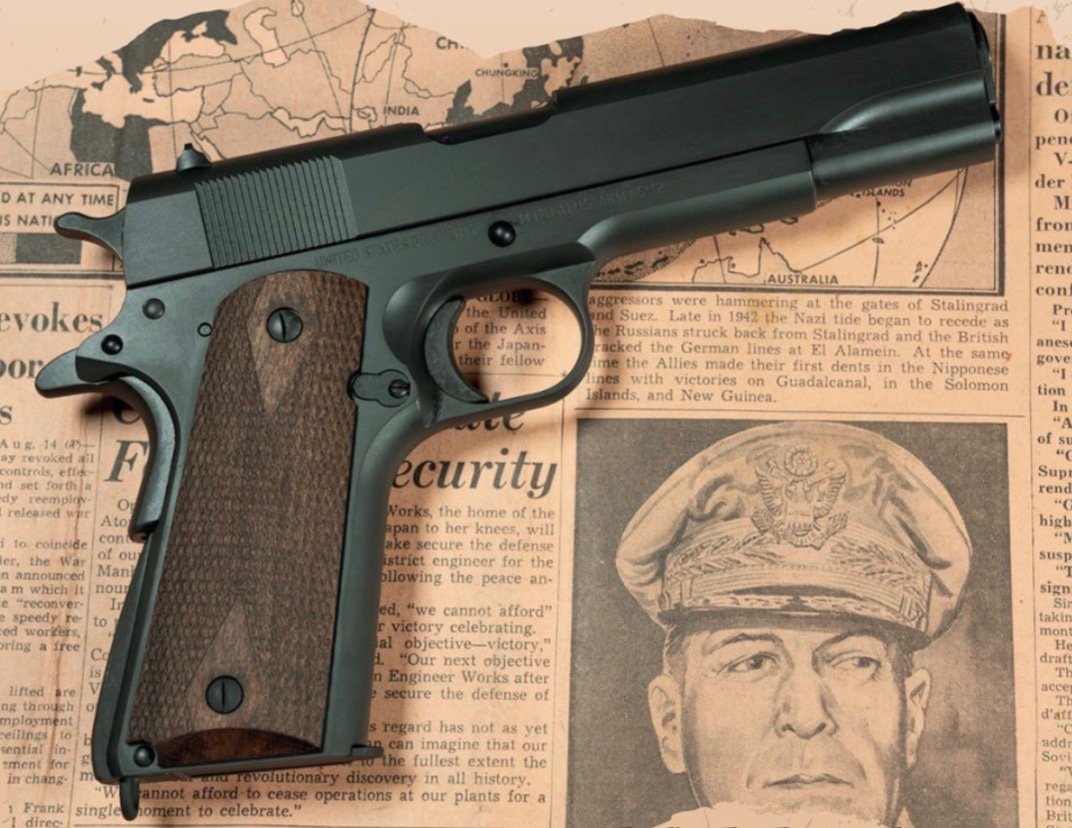
instead of starting a new topic i’ll raise the dead / CMP has them and they’re $399 and yes i has one on order
1 point
-
In that price range, my choice would be a Dan Wesson. To answer your question, I'm not using a $1500-2500 1911 in WB. I do shoot a Nighthawk in USPSA. Before last year, I was shooting a $600 STI Spartan for USPSA for a long time. My WB gun is a Kimber that is 25 years old.1 point
-
What's your most important requirements that a new gun would have to meet? In other words, what fails to give you full confidence with that Springer you have? My experience is that if the gun runs reliably, I can tune the rest quite easily to satisfy my operation of it. good luck, GJ1 point
-
Gives you a chance to practice "Loading from the Belt" 😄1 point
-
He was too vocal criticizing how things were being done especially all the changes that were happening in WB. Marshal Stone1 point
-
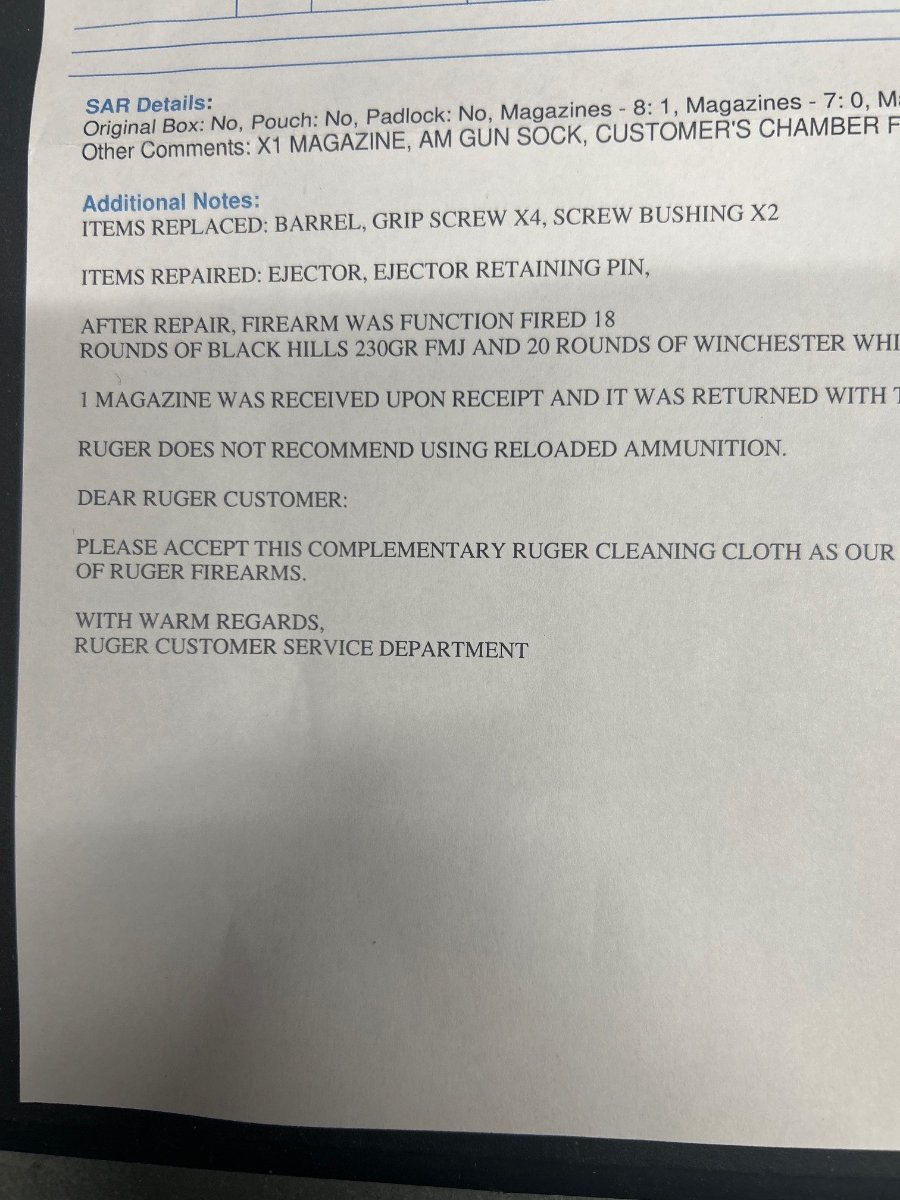
Now on second look at the packing slip that came back with my SR1911 and a call to Ruger’s CS, they actually replaced the barrel as well as repairing the ejector and ejector retaining pin. They could not tell me why the bbl was replaced so maybe it had nothing to do with my reloads?
1 point
-
I've been running 4.3 gr. of VV N320 with a 230 gr. Desperado Cowboy bullet. Won 2 Senior Traditional World Championships with it. One with an SR 1911 and one with a Colt. Must be doing something right. Marshal Stone1 point
-
The most reliable and most competitive shotgun for Wild Bunch is the Winchester Model 12. Takes no parts to have it hold 6 rounds. Most are quite smooth and reliable as is. You don’t need 2-3 like with a 97. A myriad of 1911s available for Modern category and a number for Traditional. Wild Bunch is more a game of equipment reliability and quality ammo than cowboy. The .45 ACP ammo needs to be consistent and 100%.1 point
-
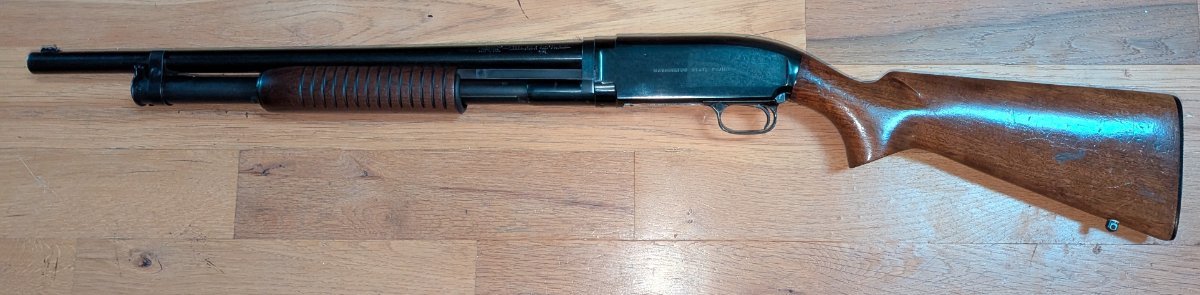
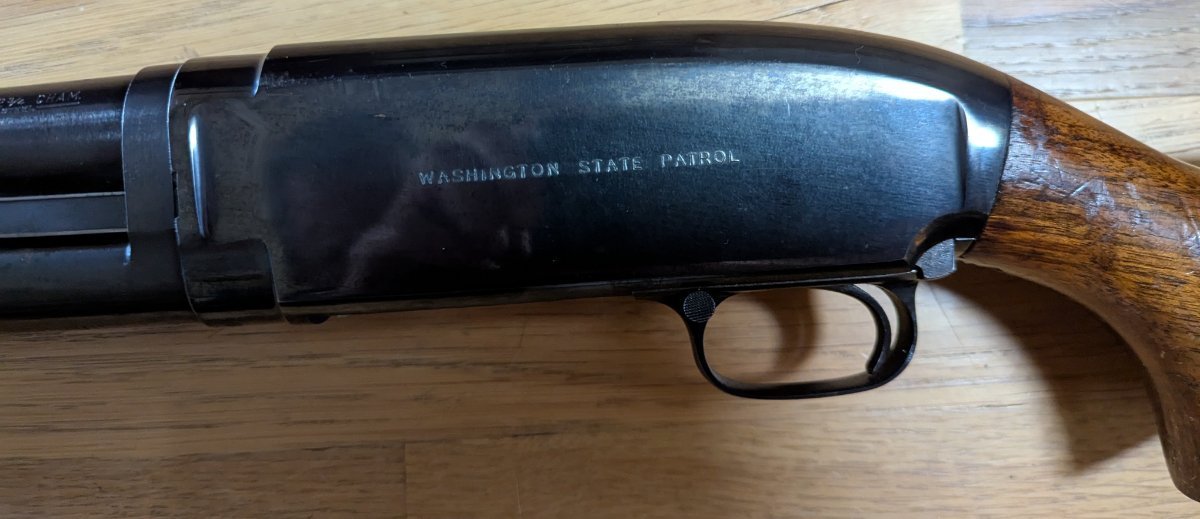
Howdy, Just sharing a recent acquisition. I picked up a neat Model 12 Riot stamped "Washington State Patrol". It's in good shape with normal wear, scuff marks and dings from being carried in a car. The serial number puts the manufacturing date in 1959. Still has a legible rack number on the stock. The interior of the receiver was extremely dirty and the bolt was gummed up with small pieces of wood, dirt, old grease and oil that was a sticky, hardened mess. The action was rough and stiff until I did a complete tear down and deep clean. After cleaning and shooting a few boxes of cowboy loads, it is smooth, like a model 12 should be. It won't be my primary Wild Bunch shotgun, but I will use it in matches/stages occasionally and shoot it for fun. I will use it, not abuse it. Based on my research, the Riot shotguns for Washington State Patrol were factory stamped on the left side of the receiver. They were replaced by the Remington 870 police model starting in the 80's. The 870's were phased in as officers retired and the last model 12 was taken out of service in the early 90's. Anybody out there know anything more about these riot shotguns?
1 point
-
Here is some more info: Cimarron's 1911 is a 1911 model, available in Blue and Nickel. It is blessed with the nubbin sights, and is a gorgeously finished pistol. MSRP is $635 and up. Taylor's is another 1911 model with a high polish Blue or Nickel finish and again the nubbin sights. MSRP is $729 in blue. Iver Johnson's 1911A1 with better sights and has a good reputation, but I haven't handled one of these myself. MSRP is $900+ Fusion Firearms has a 1911A1 with an interesting "semi-improved" set of sights, somewhere between nubs and taller sights as on the Colt 1911A1. I have built guns on Fusion frames and their stuff is very good. MSRP starts at $750. The Charles Daly is a 1911 style frame with nub sights and the stuff carrying their name seems to be well made. MSRP starts at $604 And the Auto-Ordnance and Thompson branded guns are made on the same line, so I am putting them together. They are a 1911A1 pattern with nubbin sights and all sorts of finishes available. Well finished and made over the years. MSRP starts at $750 and goes up from there. If you buy a used 1911 or A1, I would suggest in the strongest way possible to replace all the springs. Detail stripping is not difficult and Wolff makes a spring pack that is very reasonably priced, and is very cheap insurance to make your 1911 run well.1 point
-
Okay, starting with the Springfield Armory Mil-Spec 1911. This is a 1911A1 available in stainless or blued. The sights are larger than the traditional JMB nubs and have 3 dots. A dab of paint or a Sharpie will black the sights out, making this legal. Finish and machining are first class and It comes with an excellent trigger and comes with one 7 round magazine with a MSRP of $725. Next up is the Tisas 1911 also called Zig, again 1911A1 models this time with a couple of options. If you have youthful eyes, there is one with the JMB sight nubs and the "US Army" model is so close to the original Colt that the CMP is selling them. Their Service PB 45 comes with a ceracoated slide, better sights and a flat mainspring housing. I have one of the basic ones and can say the trigger is decent and the machining inside is properly done where it needs to be done. The exteriors are a heavy matte eggshell bead blast. Comes with one magazine and is made in Turkey. MSRPs are from $429 to 449. Rock Island Armory makes a solid parkerized 1911A1 and one in Nickel. These have JMB style nub sights and come with two 8 round magazines. Early ones had magazine problems but the current guns come with Act-Mags, which are very good mags. Much like the Tisas' guns, interior work is very good, while the base gun exteriors are even and matte. MSRP on the Parkerized gun is $499 while the Nickel one goes for $799. If you find a used American Tactical 1911, they are very good running guns, but it seems ATI is not listing them anymore. And Daddy of the 1911s Colt. Since CZ's acquisition of Colt their quality is spotless. Their new guns come in Matte, High Polish Blue and Stainless. The sights are excellent, clear and very easy to pick up. All finishing and machine work is excellent with very good Series 70 triggers. Comes with one 8 round magazine. Most have flat MSHs and MSRP runs from $899 to $1700. Sadly Ruger, S&W and Sig do not offer Traditional style guns.1 point
-
Try a flat mainspring housing instead of an arched one. This lowered my grip just a little and took out most of the bite.1 point
-
Sure sounds like a too-light firing pin strike is occurring on the '73 that has been rechambered to .45 auto. Small primer might have a more rigid anvil than a large primer design does, due to "bigger span" of the LP anvil's arch? It's not the outside dimensions of the .45 auto case that varies between the NT (non-toxic) SP case and the original design of the LP case. If you taper crimp both the SP cases and the LP cases the same way, then it's not likely that the gunsmith cut the .45 chamber too long (bad headspace, thus letting the round slide forward on firing pin impact). The only thing different is going to be the primer and the pocket. SP primers MAY be a little more sensitive to a FP strike than LP primers. I've not seen anyone run that test yet. Would be interesting to see, when using exactly the same brand of primers, whether SPs are easier to light off as the main spring tension is backed off. There's a tremendous number of cowboy type shooters who over the years have claimed that a particular gun after it was tuned up for lighter spring weights, would no longer run anything but Federal primers. This sounds a lot like the same story, just in a different suit. I'd bet the lack of reliability of firing can be resolved by tuning hammer fall to be a little heavier, as has been the case in hundreds of cowboy guns I've heard about and a few I've even tinkered with. Good luck, GJ1 point
-
There is no non takedown Model 12. The Featherweight is a takedown. Just a different design than a standard Model 12.0 points


.thumb.jpg.680310501a223b2c47e76c1ad9a99436.jpg)